 English
 Spanish
 French
 German
 Italian
 Chinese (Simplified)
 Japanese
 Korean
 Arabic
 Portuguese
Call us now
08045802161

 Send Inquiry
Waste Water Treatment Plant
Price 150000 INR/ Unit
Waste Water Treatment Plant Specification
- Usage & Applications
- Indsutrial
- Frequency
- 50 Hertz (HZ)
- Warranty
- 1 Year
- Power Source
- Electricity
- Water Source
- Ground Water
- Automatic Grade
- Semi Automatic
- Material
- Stainless Steel
Waste Water Treatment Plant Trade Information
- Minimum Order Quantity
- 10 Units
- Payment Terms
- Cash Advance (CA)
- Supply Ability
- 500 Units Per Month
- Delivery Time
- 10 Days
- Main Domestic Market
- All India
Waste Water Treatment Plant About
A Waste Water Treatment Plant (WWTP) is designed to treat industrial and domestic wastewater by removing contaminants, ensuring safe discharge or reuse.
Platex India offers efficient, compact, and customized wastewater treatment solutions for various industries, helping meet environmental and regulatory standards.
Remove suspended solids, oils, chemicals, and biological contaminants.
Reduce BOD (Biochemical Oxygen Demand) and COD (Chemical Oxygen Demand).
Enable water reuse or safe disposal.
Preliminary Treatment
- Screening: Removes large particles (plastic, debris)
- Grit removal: Eliminates sand and heavy particles
Primary Treatment
- Sedimentation tank
- Settles suspended solids
- Oil and grease separation
Secondary Treatment (Biological)
- Aeration tank with microorganisms
- Breaks down organic matter
- Activated sludge process
Secondary Clarification
- Settling of biological sludge
- Clear water separation
Tertiary Treatment
- Filtration (sand filter, carbon filter)
- Disinfection (chlorination/UV)
- Removes remaining impurities
Sludge Handling
- Sludge thickening
- Dewatering (filter press)
- Safe disposal
Types of Wastewater Treated
- Industrial wastewater
- Effluent from chemical plants
- Food & beverage wastewater
- Pharmaceutical wastewater
- Domestic sewage
The Waste Water Treatment Plant by Platex India is a reliable and eco-friendly solution for managing wastewater. It ensures efficient treatment, regulatory compliance, and sustainable water reuse, making it ideal for modern industrial and commercial applications.
Efficient Industrial Waste Water Solutions
Our Waste Water Treatment Plant is specifically crafted to meet the demands of industrial environments, addressing stringent water purification requirements. The stainless steel build and semi-automatic operations contribute to both reliability and operational ease. Backed by a one-year warranty, this plant is ideal for industries looking to responsibly manage ground water resources, promote sustainability, and remain compliant with regional water safety regulations.
Applications Across Indian Industry Sectors
As a multi-role provider, our Waste Water Treatment Plant is widely used in diverse industries such as manufacturing, pharmaceuticals, textiles, and more. It assists businesses in treating ground water for process use or safe disposal, improving operational efficiency while reducing environmental impact. Our comprehensive support ensures optimal performance and helps our clients adhere to all regulatory standards.
FAQ's of Waste Water Treatment Plant:
Q: How does the Waste Water Treatment Plant operate?
A: The plant utilizes a semi-automatic system that processes ground water through multiple filtration and purification stages, eliminating contaminants and ensuring water quality meets industrial standards.Q: What industries can benefit from this water treatment plant?
A: Industries such as manufacturing, textiles, pharmaceuticals, and chemical processing can leverage this plant to treat and recycle ground water, reducing both costs and environmental impact.Q: When is it recommended to use this treatment plant in an industrial setting?
A: It is advisable to use this plant whenever there is a need to purify ground water for industrial utilization or before discharging it, ensuring compliance with environmental norms and protecting equipment from contamination.Q: Where are your waste water treatment plants available in India?
A: We distribute, export, and supply these plants across India, serving industries in both urban and industrial regions through a wide network of partners and service providers.Q: What is the typical process involved in treating ground water?
A: Ground water passes through a sequence of filtration, sedimentation, biological treatment, and disinfection stages, facilitated by the plant's semi-automatic features and durable stainless steel components.Q: What are the main benefits of installing your Waste Water Treatment Plant?
A: Key benefits include improved water quality, regulatory compliance, reduced operational costs, and support for sustainable water management practices within industrial operations.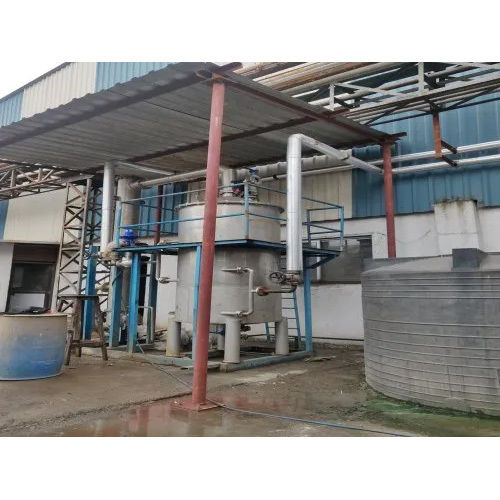

Price:
- 50
- 100
- 200
- 250
- 500
- 1000+

More Products in Water Treatment Plant Category

Industrial Waste Water Treatment Plant
Price 100000 INR / Unit
Minimum Order Quantity : 10 Units
Material : Stainless Steel
Water Source : Ground Water
Automatic Grade : Semi Automatic
Frequency : 50 Hertz (HZ)

GST : 27APIPM9670B1ZO

 Send Inquiry
- Evaporation Plants
- Shell And Tube Condenser
- Heat Exchanger Gasket
- Clean In Place System
- Evaporative Condenser
- Heat Exchanger Cleaning Service
- Heat Exchanger Installation Service
- Heat Exchanger Maintenance Service
- Heat Exchanger Repair Service
- Penetration Testing Services
- Water Treatment Plant
- Shell & Tube Heat Exchanger & Condenser
- Effluent Treatment Plant
- Industrial Oil Cooler
- Hot Water Generation System
- Milk Pasteurization Plant
- Acid Coolers
- Single Effect Evaporator
- Industrial Heat Exchanger
- Heat Recovery System
- Heat Exchanger Spare
 Send Inquiry
 Send SMS
Developed and Managed by Infocom Network Private Limited.

